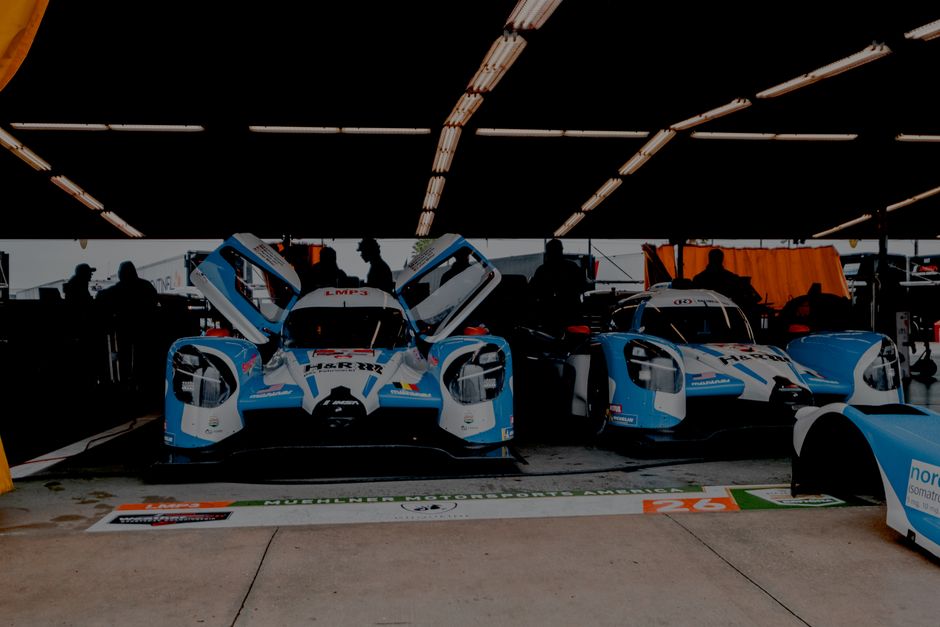
In the endurance racing world, I spent eight seasons looking at cold, hard telemetry. We calculated fuel burn rates, tire degradation curves, and the probabilistic likelihood of a full-course yellow. When the car pulled into the pit lane, we didn’t "feel" like it was the right time to change tires; we calculated the intersection of our pace drop-off and the field’s average stint length. It was precise, it was scientific, and it was—above all—predictable. You can model a car because a car obeys the laws of physics.
The gambling industry loves to use the language of performance. They talk about Return to Player (RTP) percentages, hit rates, and volatility indexes. It sounds like the engineering data I used to look at on the pit wall. But there is a fundamental, dangerous category error being made by players who think they can "predict" a spin on a slot machine. Even if you know the RTP, you are not engaging in a strategic exercise. You are engaging in a zero-memory event.
The RTP Fallacy: A Back-of-the-Envelope Reality Check
Let’s start with a simple sanity check. Suppose you are playing a track temperature effect on tyre wear slot game on a platform like MrQ. The site tells you the RTP is 96%. Many players mistake this for a guarantee of return over the short term. They think, "If I spin 100 times at £1, I’ll get £96 back."
Let's run the math. If the standard deviation of a typical slot machine’s payout is massive—often hundreds of times the bet—your sample size of 100 spins is statistically invisible.
Scenario Sample Size Standard Error Prediction Utility Endurance Stint 500 laps Low (Physical constraints) High (Predictive) Slot Session 100 spins Extremely High Zero (RNG Independence)In racing, if my fuel sensor reports 100 liters, I can predict exactly how many laps that car can do within a 0.5% margin. In a slot machine, the RTP is a long-term mathematical limit, not a current state. It is an average calculated over millions, sometimes billions, of iterations. If you believe your current spin is "due" to pay out because the RTP is 96%, you are ignoring the core nature of an RNG (Random Number Generator). The machine has no memory of the previous spin, let alone the last thousand.
The Monte Carlo Misunderstanding
We use the Monte Carlo principle in racing to model race outcomes. We simulate the race 10,000 times with varying variables—rain probability, safety car timing, pit stop errors. By the time the race starts, we have a distribution of outcomes. We know that in 70% of simulations, a specific strategy wins. We aren't predicting the *next* corner; we are managing the *probability of Have a peek at this website the aggregate outcome*.
Players often try to apply Monte Carlo logic to slots, thinking that if they run enough simulations or use tracking software, they can map out the "distribution" of a game. This is a flawed application of the theory. In racing, we have "data density"—the car broadcasts hundreds of data points per second: suspension travel, tire temps, brake pressure. These are physical inputs that dictate the output.
A slot machine is a closed system. The "telemetry" of a slot machine is internal code. Papers published in journals like Applied Sciences (MDPI) often analyze the entropy of pseudorandom number generators. They prove that these systems are designed specifically to be unpredictable. If you could model the output based on previous spins, the RNG would be considered broken, not strategic. The machine doesn't have a "stint" that degrades; it resets to a state of absolute randomness on every single spin.
Telemetry vs. Randomness
I’ve read analyses—sometimes cited in places like the MIT Technology Review regarding algorithmic fairness—that discuss the architecture of digital gaming. One thing remains constant: the separation between the player's interface and the game logic.
In a race car, if I see the telemetry showing a tire is graining, I change the strategy because the physical reality has changed. In a slot machine, there is no "graining." There is no "tire wear." There is only the RNG output.
Some players believe that "hot" or "cold" cycles exist. They look for patterns in the symbols. This is a cognitive bias known as pareidolia—seeing patterns where none exist. While a race strategist deals with causality (if we push hard here, we lose time later), the gambler deals with RNG independence. You cannot "drive" a slot machine. You cannot manage its "pace." You are simply a spectator to a process that is mathematically indifferent to your previous bets.
The Pit Wall Mentality: Why Strategy Fails Here
When I was on the pit wall, I hated the word "instinct." Instinct is just a fancy word for data you haven't processed yet. If a strategist says, "I have a gut feeling we should box now," they are lying. They are actually reacting to a subconscious pattern in the telemetry they’ve been staring at for three hours.
However, you cannot apply this to gambling. People who call a strategy "game-changing" in the context of slots are selling you a lie. There is no strategy that can overcome the house edge, because the house edge is a static mathematical value built into the game’s architecture.
If you want to treat gambling like a race, consider the rules of the game to be the "technical regulations." In racing, if you try to circumvent the regulations, you get disqualified. In a casino, if you try to "out-engineer" the RNG, you aren't a strategist—you're just a victim of the gambler’s fallacy.

Summary of the Mathematical Reality
Independence: Each spin is an isolated event. The outcome of spin 50 has no correlation with spin 51. Density: The "telemetry" available to you is essentially zero. You see the result, but you never see the underlying entropy state of the RNG. Scale: RTP is a metric of scale, not timing. It only functions when looking at a massive, multi-player dataset, never at an individual session level.Conclusion: Play for the Sport, Not the Logic
I left the pit wall because the data became too sterile, and the sport shifted too far toward simulation. But at least in racing, the data was *real*. It mattered. When you engage with slot machines, understand that you are not in a strategic environment. You are in a high-variance, entertainment-focused system.
Don't be the person who tries to "read" the machine. Don't waste your energy building spreadsheets to track your "win frequency." The math is already decided before you even hit the button. If you’re looking for a thrill, fine—but don't pretend there’s a pit wall strategy that can beat the house. In this game, the only strategy that actually works is knowing when to close your laptop and walk away from the track.